Alabama DUI Attorneys
The Polson Law Firm
The Polson Law Firm





If you have been arrested for DUI in Alabama, several important legal issues require attention. The key questions are: Which court will handle my DUI charge? What will happen to my driver license? What will happen in court?
The courthouse where your case is heard depends on which law enforcement agency arrested you.
If a municipal officer arrested you, your case goes to the municipal court of that agency. For example, if a Hoover police officer arrested you in Hoover, your case goes to Hoover Municipal Court. We appear in the municipal courts of Mountain Brook and Vestavia Hills, and in Birmingham as well.
If a county or state officer arrested you, your case goes to District Court in the county where you were arrested. A sheriff's deputy or an Alabama State Trooper would fall into this category. For example, if a State Trooper arrested you in Shelby County, your case goes to Shelby County District Court.
Felony DUI cases are tried in Circuit Court. The District Court of the county of arrest holds the preliminary hearing and may accept a guilty plea. If you disagree with the outcome in municipal or district court, you have 14 days to file notice of appeal to the Circuit Court for a new trial.

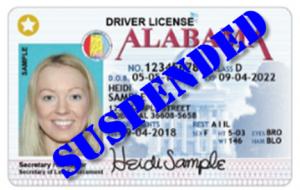
A DUI arrest in Alabama poses two separate threats to your driver license: administrative suspension and conviction-based suspension.
Upon arrest, the State will move to suspend your license if you refused the breath test or registered above the legal limit. The minimum suspension is 90 days if your record shows no alcohol or drug enforcement contact in the past 10 years. It is one year with one prior contact, three years with two, and five years with three or more.
Here is good news: The administrative suspension does not take effect for 45 days after the officer serves you with the notice of intended suspension. This window gives you time to contact an attorney and challenge the suspension. You must act quickly, though. You have only 10 days from that notice to demand an administrative hearing. Missing that deadline waives both the hearing and judicial review, and a hearing request does not by itself stay the suspension. To learn more, see whether your license is suspended immediately after a DUI in Alabama.
The second threat comes from conviction. If you are convicted of DUI, your license will be suspended based on the offense level. Hiring a skilled DUI attorney is crucial. An experienced attorney can help you defend against conviction and protect your driving privileges.
People arrested for DUI often ask this question. Here are the key points.
First, anyone arrested for DUI is presumed innocent. You have an absolute right to be defended and to contest the charge. The Constitution prohibits the State or City from forcing you to testify against yourself.
Retaining an experienced DUI attorney who knows the local courts well is essential. That attorney can identify weaknesses in the prosecution's case and develop an effective defense strategy. Understanding common DUI FAQs can also help you prepare.
The attorneys at Polson & Polson, P.C. are award-winning DUI Defense Lawyers in Alabama. They have handled thousands of DUI cases throughout the State. Whitney Polson has litigated DUI cases in every county of Alabama. His experience spans from Baldwin County to Madison County. His work also includes Shelby County, Jefferson County, and Lee County. He has handled cases in Birmingham, Mountain Brook, Vestavia Hills, Hoover, Helena, Calera, Auburn, Tuscaloosa, Gulf Shores, and Enterprise.

Field sobriety tests – such as the walk-and-turn, one-leg stand, and horizontal gaze nystagmus – are roadside exercises officers use to assess possible impairment. These tests are not legally required. A driver may decline to perform them. That refusal alone does not carry an automatic license penalty.
The chemical breath test is different. Under Alabama's implied consent law, any person who drives on Alabama's public highways has consented to a chemical test of blood, breath, or oral fluid when lawfully arrested for a DUI offense. If a driver refuses the chemical test, the Alabama State Law Enforcement Agency will suspend that person's driving privilege separate from the criminal case. The officer must tell the driver that refusal will result in a suspension of driving privileges for a minimum of 90 days.
Beyond the license consequences, prosecutors may introduce the refusal itself as evidence at trial. A jury could hear that the driver declined the test and draw its own conclusions.
Whether to submit to or refuse the chemical test depends on the specific facts of a situation. Speaking with an attorney before an arrest – or as soon as possible afterward – can help you understand the options and consequences involved. You may also review information about your rights during a DUI stop.
Penalties for DUI in Alabama rise with the number of prior DUI convictions within a ten-year period. One exception: once a person has a felony DUI conviction, every later DUI conviction is a felony no matter how old that prior conviction is. Our page on whether is a DUI a felony in Alabama walks through how the grades differ.
For first offense DUI cases in Alabama, the statute sets a fine of not less than $600 and not more than $2,100. You may face up to 365 days in jail, a fine, or both. Your license will be suspended for 90 days, unless you elect to install an ignition interlock device for 90 days instead. You must attend mandatory DUI school. If you refused the breath test, had a reading of 0.15 or greater, had a child under 14 in the vehicle, or injured someone else, you must use an Ignition Interlock device for one year.
For second offense DUI cases in Alabama within ten years, the statute sets a fine of not less than $1,100 and not more than $5,100. Jail time is up to 365 days, and the sentence must include at least five days in jail or at least 30 days of community service, which cannot be suspended or probated. Your license will be revoked for one year. You must use Ignition Interlock for two years and attend mandatory DUI school.
For third offense DUI cases in Alabama within ten years, the statute sets a fine of not less than $2,100 and not more than $10,100. Jail time is 60 to 365 days, with a minimum mandatory 60 days that cannot be probated or suspended. Your license will be revoked for three years. You must use Ignition Interlock for three years and attend mandatory DUI school.
For a fourth or later DUI offense within ten years, or for any DUI by a person who already has a felony DUI conviction, the statute sets a fine of not less than $4,100 and not more than $10,100. Prison time is one year and one day to ten years, with a minimum mandatory ten days served in the county jail. Your license will be revoked for five years. You must use Ignition Interlock for four years and attend mandatory DUI school.

Beyond court-ordered penalties, DUI convictions in Alabama carry additional consequences. These include higher insurance premiums, loss of employment or difficulty finding employment, denial of entry into certain countries, and family law issues. The attorneys at Polson & Polson, P.C. can help you attempt to avoid or mitigate these penalties.
A fourth or later DUI conviction within ten years – or any DUI conviction by a person who already has a felony DUI – is classified as a Class C felony. This carries a minimum sentence of one year and one day in prison, with a mandatory minimum of ten days served in county jail. To understand how many DUIs constitute a felony, see how many DUIs is a felony in Alabama.
Enhanced penalties also apply in certain situations. Under Alabama law on child endangerment in DUI cases, a person over 21 convicted of DUI with a child under 14 in the vehicle must be sentenced to at least double the minimum punishment. The same doubling applies to any driver found to have had 0.15 percent or more alcohol in the blood. On a misdemeanor DUI, that doubling sets the minimum punishment at one year of imprisonment, which the court may suspend except for the mandatory jail days a second or third conviction carries. A first-offense driver with a BAC of 0.15 or higher, or who refused the chemical test, must use an Ignition Interlock device for one year; other first offenders may instead elect a 90-day device in place of the suspension.
A legal DUI is a term for the way Alabama's DUI statute reaches beyond the familiar scenario of driving drunk over the 0.08 BAC limit. A person may face DUI charges based on impairment from any substance – not only alcohol. The 0.08 figure is not the only limit, either: a driver under 21 violates the statute at 0.02 percent or more, a school bus or day care driver at more than 0.02 percent while on duty, and a commercial driver at 0.04 percent or more.
Subsection (a) sets out five separate ways a driver can violate the law:
The fifth subsection is especially broad. It covers lawfully prescribed medications, over-the-counter drugs, and any other substance that causes impairment. A legal DUI charge may arise even when the driver has a valid prescription and took the medication as directed. Under Alabama law, the fact that a driver is legally entitled to use alcohol or a controlled substance is not a defense to a DUI charge. To better understand the alcohol levels involved, you can use an Alabama DUI BAC calculator.
This means a legal DUI focuses on impairment rather than legality of possession. If the substance – whatever it is – made the driver incapable of driving safely, a DUI charge may follow. Drivers who take prescription medication should understand how these provisions apply and may wish to speak with an attorney about the potential risks.
A prescription drug DUI is one of the most misunderstood DUI charges in Alabama. Many drivers assume that a valid prescription protects them from criminal charges. It does not. Under Alabama's prescription drug DUI law, a driver may be charged with DUI if any substance – including a lawfully prescribed medication – impairs them to a degree that renders them incapable of driving safely.
Several categories of prescription medications commonly appear in these cases. Opioid pain relievers, benzodiazepines, muscle relaxants, sleep aids, and certain antihistamines can all affect reaction time, coordination, and judgment. Even medications taken exactly as prescribed may cause impairment that draws law enforcement attention.
Officers build these cases through three main methods. They observe how the driver operates the vehicle. They conduct standardized field sobriety tests. They also use a Drug Recognition Evaluation performed by a specially trained officer. Because breath testing does not detect drugs, officers usually request a blood draw to identify the substance and its concentration.
Understanding how to fight a DUI charge for prescription drugs starts with reviewing the specific facts of the stop, the investigation, and the testing. A defense attorney may evaluate several angles:
These cases are highly fact-intensive. Reviewing the discovery materials with an experienced DUI attorney is essential to identifying the strongest available defenses.
A prohibited acts charge in the context of an Alabama DUI case refers to the specific conduct the driver is accused of under the DUI statute. This statute enumerates several distinct prohibited acts. Each describes a different way a person can violate the law.
When law enforcement issues a citation or an indictment is returned, the charging document specifies which subsection of the statute the driver allegedly violated. For example, a driver may be charged under subsection (a)(1) for having a BAC at or above 0.08. Or the driver may be charged under subsection (a)(5) for impairment by any substance. These are different prohibited acts. Each one requires the prosecution to prove different elements.
The specific prohibited acts charge matters for defense strategy. A per se BAC charge under subsection (a)(1) turns largely on the chemical test and whether it was properly administered. An impairment-based charge under subsection (a)(2) or (a)(3) depends more on the officer's observations and other evidence of how the driver was actually operating the vehicle.
Subsections (a)(3) through (a)(5) require impairment to a degree that renders the driver incapable of driving safely, while subsection (a)(2) requires only that the driver was under the influence of alcohol. Because those elements differ by subsection, the defense approach may vary significantly depending on which prohibited acts charge appears in the case. A qualified DUI defense attorney can review the charging document and identify which defenses apply to the specific subsection alleged.
Yes. Upon arrest for DUI in Alabama, your license is typically seized by the police. You are given a form called an AST-60. The temporary driving permit issued with it is valid for 30 days from the date of issuance (assuming your license was valid at the time of arrest).
Before the suspension takes effect 45 days after that notice, you may contest the taking of your driver license. You do this by using your administrative remedies under the Alabama implied consent law. The sequence of these administrative steps is: (1) a written hearing request within 10 days of the notice, with administrative review available for up to 90 days; (2) the administrative hearing; and (3) judicial review in circuit court within 30 days of the agency's final decision.
An experienced DUI attorney in Alabama will help you through these steps. The skilled DUI attorneys at Polson & Polson, P.C. have guided thousands of Alabama drivers arrested for DUI through this process.
A DUI conviction in Alabama stays on your record forever. Alabama's expungement law bars expunging any conviction for a serious traffic offense, and DUI is one of those offenses. A DUI charge that was dismissed, no-billed, or ended in a not-guilty verdict can still be expunged. This is why it is crucial to properly defend your DUI case in Alabama. For more information about DUI consequences, learn how long you stay in jail for a DUI in Alabama.
A DUI charge in Alabama – whether it involves alcohol, prescription medication, or any other impairing substance – demands prompt attention. The ten-day deadline to challenge an administrative license suspension begins running when the officer serves the notice of intended suspension. Early contact with a lawyer for DUI helps preserve defenses and protect driving privileges.
The DUI defense attorneys at Polson & Polson, P.C. have handled thousands of DUI cases throughout Alabama. Whitney Polson has over 21 years of experience defending DUI cases. He has served as a municipal judge. He authored the DUI defense book and manual used by DUI defense lawyers in Alabama. He is a Founding Member of the DUI Defense Lawyers Association. Attorney Alexander Carrie, a former district attorney in Jefferson County, brings valuable perspective from his role as a former prosecutor.
If you are facing a DUI charge – including a prescription drug DUI or a charge based on impairment by a legal substance – contact Polson & Polson, P.C. to schedule a free consultation. You may also learn how to avoid a DUI in Alabama to better understand prevention. Acting quickly may make a meaningful difference in the outcome of your case.

Yes, you can be charged with a DUI in Alabama for taking a legally prescribed medication. Under Alabama law regarding legally prescribed substances, the fact that a person is legally entitled to use alcohol or a controlled substance is not a defense to a DUI charge. If a prescribed medication impairs your ability to drive safely, you may face the same DUI penalties as any other impaired driver. This applies to opioids, benzodiazepines, sleep aids, and other medications that affect coordination or judgment.
A legal DUI in Alabama refers to a DUI charge that arises from impairment by a substance the driver was legally allowed to use. This includes prescription medications or over-the-counter drugs. Alabama's DUI statute covers impairment from any substance, not just alcohol. The legality of possessing or using the substance does not matter if it rendered the driver incapable of driving safely.
Prosecutors build these cases using several types of evidence. They rely on the officer's observations of impaired driving. They also use the driver's performance on field sobriety tests. They present a Drug Recognition Evaluation conducted by a trained officer. Finally, they offer blood test results showing the presence and concentration of the drug. They must show the substance impaired the driver to a degree that rendered the driver incapable of driving safely – not just that the drug was present in the bloodstream.
A prohibited acts charge identifies which specific subsection of Alabama's DUI statute the driver allegedly violated. Subsection (a) lists five distinct prohibited acts. These range from driving with a BAC of 0.08 or more to driving under the influence of any impairing substance. The statute sets lower limits elsewhere – 0.02 percent for a driver under 21 and 0.04 percent for a commercial driver. The subsection charged determines what the prosecution must prove and shapes the available defense strategies.
No, a valid prescription cannot be used as a defense to a DUI charge in Alabama. Alabama law states that being legally entitled to use alcohol or a controlled substance is not a defense to a DUI charge. However, a valid prescription may be relevant to your overall defense strategy in other ways. It may help explain the presence of a substance in blood test results. It may also help challenge whether the drug level present actually caused impairment at the time of driving. An experienced DUI attorney can evaluate how prescription evidence may factor into your specific case.
If you have been arrested for DUI in Alabama, there are numerous legal issues to consider. Primarily, which court will my DUI charge be handled in Alabama, what will happen to my driver license because of my DUI arrest in Alabama and what will happen in court on my DUI charge.
Which courthouse you go to for a DUI in Alabama is based upon which law enforcement agency arrests you. If you were arrested by a municipal officer, your case will go to the municipal court (city court) of the arresting agency (example, if you were arrested in Hoover by a Hoover police officer, your case will go to the Hoover Municipal Court. If you were arrested by a county or state officer, such as a sheriff’s deputy or Alabama State Trooper, you will appear for your DUI case in the District Court in the County of arrest (example, if arrested for DUI by a State Trooper in Shelby County, your DUI case will be handled in the Shelby County District Court.
All felony DUI cases in Alabama begin in the District Court of the county of arrest. You may appeal your DUI case in Alabama to the Circuit Court of the County, should you not like the resolution in the municipal or district court.
Many people arrested for DUI in Alabama ask what will happen to my driver license because of my DUI arrest. There are two possible threats to your driver license upon arrest for DUI in Alabama; an administrative suspension and conviction for DUI. Upon arrest for DUI in Alabama, the State will seek to administratively take your driver license if you refuse the breath test or register over the legal limit.
The good news for those arrested for DUI in Alabama, is the administrative suspension does not go active until 45 days from the date of arrest; the reason for which is so the driver may contact an attorney and contest the administrative suspension. You must act quickly, as the first administrative challenge to a DUI suspension in Alabama, must be done within 10 days of arrest.
The second way a DUI arrest in Alabama may impact a driver license, is upon a conviction; therefore, it is of great importance to hire a skilled and experienced DUI attorney to defend your case.
Is often a question people ask when arrested for DUI in Alabama. First, any person arrested for DUI in Alabama is presumed innocent of the charge. They have an absolute right to be defended and contest the charge. The Constitution prohibits the State or City from compelling the person arrested for DUI from having to testify. Retaining a skilled and experienced DUI attorney, that has vast knowledge and experience in the courts, is crucial for defending your case.
The attorneys of Polson & Polson are award-winning DUI Defense Lawyers in Alabama and have handled thousands of DUI cases throughout the State. Mr. Polson has litigated DUI cases in every county of Alabama, from Baldwin County to Madison County and in between, such as Shelby County, Jefferson County, Lee County and cities such as Birmingham, Mountain Brook, Vestavia Hills, Hoover, Helena, Calera, Auburn, Tuscaloosa, Gulf Shores, Enterprise and elsewhere.
Penalties for DUI in Alabama are based upon the number of prior convictions for DUI you have within a 10-year period. For first offense DUI cases in Alabama, within 10 years, the range of penalty is $600-2100 fine, 0-365 days in jail, 90 days license suspension, Ignition Interlock if refusal of breath test of .15 or greater, and mandatory DUI school.
For second offense DUI cases in Alabama, within 10 years, the range of penalty is $1100-5100 fine, 5-365 days in jail (minimum mandatory 5 days to serve or possible 30 days of community service), 1 year license revocation, Ignition Interlock, and mandatory DUI school.
For third offense DUI cases in Alabama, within 10 years, the range of penalty is $2100-10100 fine, 60-365 days in jail (minimum mandatory 60 days to serve), 3 year license revocation, Ignition Interlock, and mandatory DUI school.
For fourth or more DUI offense in Alabama, within 10 years or any second felony DUI arrest after previously having been convicted for DUI, the range of penalty is $4100-10100 fine, 1 year and one day to 10 years in prison (minimum mandatory 10 days to serve), 5 year license revocation, Ignition Interlock, and mandatory DUI school.
Additional penalties for DUI convictions in Alabama, outside of what the court may impose, include higher insurance premiums, loss of employment or difficulty in gaining employment, denial of entry in to certain countries, family law issues and others. Our attorneys at Polson & Polson can help you attempt to avoid or mitigate these penalties.
Yes. Upon arrest for DUI in Alabama, your license is typically seized by the police and you are given a form, called an AST-60. This form serves as your driver license for 45 days (assuming you were valid at the time of arrest otherwise. During this 45 day period, you may contest the taking of your driver license by exhausting your administrative remedies under the Alabama Implied Consent Law.
The sequence of these administrative steps are: 1) 10 day demand for administrative review and hearing 2) administrative hearing and 3) judicial review. An experienced DUI attorney in Alabama will help you through these steps.
The experienced and authoritative DUI attorneys of Polson & Polson are glad to guide and assist you through this process, as they have for thousands of Alabama drivers arrested for DUI.
Unfortunately, a DUI conviction in Alabama stays on your record forever. There is no expungement of DUI convictions in Alabama. This is why it is crucial to properly defend your DUI case in Alabama.
The DUI Defense Lawyers of Polson & Polson are experienced, authoritative and award winning.
Seeking an experienced DUI Attorney in Alabama is important. Whitney Polson has over 21 years of experience defending DUI cases in Alabama, has added insight from serving as a municipal judge, is the author of the premiere DUI Defense book and manual for DUI Defense Lawyers in Alabama, is a Founding Member of the DUI Defense Lawyers Association, Member of the National College for DUI Defense, member of the Alabama Criminal Defense Lawyers Association, member of the National Association of Criminal Defense Lawyers, and member of the American Bar Associaton.
Whitney has familiarity in all counties of Alabama, including Shelby, Baldwin, Jefferson, Tuscaloosa, Madison, Lee to name a few and is frequently litigating DUI cases in courts such as the Shelby County District Court, Jefferson County District Court, Mountain Brook Municipal Court, Birmingham Municipal Court, Hoover Municipal Court, Vestavia Hills Municipal Court, Helena Municipal Court, Calera Municipal Court, Gulf Shores Municipal Court, to name a few.
Mr. Polson also is frequently asked to speak at seminars to other lawyers on judges about DUI cases. Attorney Alexander Carrie, one of the DUI Defense lawyers on staff with Polson & Polson, is a former district attorney in Jefferson County and brings a wealth of experience and added vantage from his role as a former prosecutor.
If you have more questions or need assistance with your DUI case in Alabama (including all counties and cities, Birmingham, Hoover, Vestavia Hills, and elsewhere) , don’t wait to contact Polson & Polson. Our attorneys and staff are ready to provide the guidance and legal representation needed during your case.


