Alabama DUI Attorneys
The Polson Law Firm
The Polson Law Firm




Facing DUI charges in Alabama carries serious consequences that escalate dramatically with each offense. If you’re wondering how many DUIs constitute a felony in Alabama, understanding the state’s strict impaired driving laws and the 2018 legislative changes to Alabama DUI laws is critical to protecting your future.
In Alabama, a fourth DUI conviction within a 10-year period automatically will be accused as a Class C felony offense. However, even a first-time DUI offender can be charged with a felony DUI case under specific aggravating circumstances, such as by causing serious bodily injury to any other person (passenger, driver or occupants of another vehicle or a pedestrian) OR by causing an accident that results in one of more deaths of anyone else.

Alabama ranks 10th in the nation for drunk driving fatalities, with 5.5 deaths per 100,000 residents and 29% of all traffic fatalities involving alcohol-impaired drivers. The state’s aggressive approach to repeat offenders reflects this serious public safety concern. In 2023 alone, impaired driving contributed to 4,398 traffic crashes and 154 fatalities across Alabama.
Understanding when a DUI becomes a felony, and now knowing the severe penalties involved, carefully identifying your criminal defense attorney options is essential. Don’t let any DUI charge in Alabama determine your future, since even a first offence DUI cannot ever be removed from your record, if convicted.
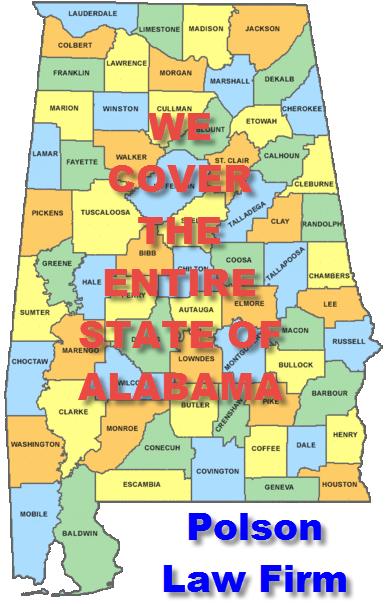
Contact our highly experienced DUI defense team at (205) 871-8838 for your initial confidential consultation. We make ourselves available 24/7, including weekends and holidays, because the stress any DUI arrest creates can be overwhelming. After hours call (205) 401-3171. Our Alabama DUI defense team covers the entire State of Alabama.
Alabama law classifies most DUI offenses as misdemeanors, but specific circumstances trigger felony charges with dramatically harsher penalties. The state’s felony DUI provisions have become more stringent since 2018, when lawmakers extended the lookback period and implemented permanent felony status for repeat offenders.
Fourth DUI Within 10 Years: The Primary Felony Trigger
Under Alabama Code § 32-5A-191(h), a fourth DUI offense within a 10-year period is automatically classified as a Class C felony. This lookback period was extended from five years to 10 years in July 2018 through Act 2018-546, significantly increasing the number of offenders facing felony charges.
The 10-year lookback period is now calculated from the date of the previous conviction’s sentencing to the date of the current offense arrest. This new calculation method prevents defendants from delaying cases to avoid enhanced penalties—a strategy that was sometimes effective under the old five-year lookback, which was measured from conviction date to conviction date.
The Critical 2018 DUI Law Change: Once you are convicted of a felony DUI in Alabama, all new, future DUI arrests will automatically be charged as felonies, regardless of how much time has passed. This law that causes a permanent felony DUI status on future arrests for driving under the influence represents one of the most significant changes to Alabama’s DUI laws. The Legislature passed the bold and unforgiving new statute to try to eliminate any possibility of these proven unsafe motorists from skirting future DUI charges being reduced to a misdemeanor crime.
In addition to criminal charges, your DUI arrest triggers an administrative license suspension that takes effect 45 days after arrest. You have only 10 days from your arrest date to file an appeal with Alabama DPS to challenge this suspension.
Missing this deadline means automatic license suspension regardless of the outcome of your criminal case, so call us NOW to learn how to protect your ability to keep driving. Our main number is 205-871-8838, so dial it now. After hours, on holidays or weekends, this after-hours number should be your second attempt: 205-401-3171.

While most first-time DUI offenses in Alabama are misdemeanors, certain aggravating circumstances on Alabama drunk driving cases can elevate even a first offense DUI to a crime having a felony status:
DUI Causing Serious Bodily Injury: If a DUI results in serious physical harm to another person, the charge can be elevated to a felony regardless of prior offenses. The prosecution must prove that impairment directly caused the injury.
DUI Causing Death: When a DUI results in a fatality, Alabama prosecutors can charge the driver with:
DUI with Child Passenger Under 14: While having a child under 14 in the vehicle doesn’t automatically create a felony charge, it doubles the minimum penalties for any DUI offense and can influence prosecutorial charging decisions. For a fourth DUI offense with a child passenger, penalties can reach 2 years and 2 days to 20 years in prison.
High BAC (0.15% or Higher): A blood alcohol concentration of 0.15% or above is considered an aggravating factor that doubles minimum penalties, though it doesn’t automatically create felony charges on a first offense. However, 63% of Alabama’s drunk driving fatalities involve drivers with BAC of 0.15% or higher, making this “nearly two-thirds of all cases” statistic a significant “negative” factor in prosecution decisions about whether to refuse all favorable plea deal negotiations that a DUI attorney near me might otherwise be able to negotiate.
Alabama’s lookback period is a critical concept that determines how prior DUI convictions impact sentencing for new offenses. The state’s 2018 law changes dramatically altered this landscape, making it easier for prosecutors to pursue felony charges against repeat offenders.
The 2018 Law Change: The Lookback Period Changed from 5 Years to 10 Years
Prior to July 1, 2018, Alabama used a five-year lookback period measured from conviction date to conviction date. This allowed skilled DUI attorneys to delay cases strategically, potentially allowing prior convictions to “age out” of the lookback window.
Act 2018-546 (when passed by the Alabama Legislature) made Three Transformative Changes:
For mandatory sentence enhancements, Alabama courts examine the 10-year window to determine if previous DUI convictions exist. However, judges in Alabama retain discretion to consider that driver’s entire lifetime DUI conviction history when imposing sentences, even for convictions outside the newly enacted 10-year window.
Yes, and out-of-state convictions for DWI vs DUI count: Alabama recognizes DWI-DUI convictions from other states and territories when calculating the lookback period. A previous DUI conviction from Georgia, Mississippi, Tennessee, Florida, or any other state will be counted in Alabama’s 10-year lookback calculation.
The practical impact of prosecutions now (after these legislative changes) has been dramatic. Alabama conviction records showed very few felony DUI convictions prior to the new law in 2018, which used a five-year lookback period. But, now this lookback calculation is changed under the newly crafted statute.
This was due to skilled and experienced driving while intoxicated criminal defense lawyers using delaying tactics effectively, so that any new DUI arrest would only be counted as a 1st DUI offense. The new 10-year lookback law (and how that time frame is calculated) and enactment of the permanent felony status provisions have made felony DUI prosecutions far more common since 2018. Anyone facing such potentially life-altering criminal charges do not need an “average” or “cheap” criminal law attorney at their side when going to court on such cases.
A fourth DUI conviction in Alabama triggers Class C felony penalties that can include lengthy prison sentences, substantial fines, permanent license revocation, and lifelong collateral consequences. These penalties are mandatory and cannot be “negotiated away” upon conviction.
Prison Sentence
Incarceration Range: A felony DUI conviction carries imprisonment of 1 year and 1 day to 10 years in state prison. Sentences of three years or less are typically served in county jails, while sentences exceeding three years must be served in an Alabama state penitentiary.
Mandatory Minimum: Courts must impose a mandatory minimum jail sentence of 10 days that cannot be suspended or probated. This means you will serve at least 10 days behind bars upon conviction, with no possibility of alternative sentencing for this minimum.
The wide sentencing range (1 to 10 years) gives judges significant discretion based on factors including:
At this stage of any criminal law case, guidance from and experienced felony DUI attorney can often make a substantial difference in the potential judicial punishments handed down, within this minimum to maximum range that your sentence will fall. The selection of your legal warrior to defend your case can potentially save you many months (or even years) of incarceration.
Fines and Court Costs
Felony DUI convictions carry substantial financial penalties:
Fine Range: $4,100 to $10,100
Impaired Drivers Trust Fund: Additional $100 mandatory fee
Court Costs: Varies by jurisdiction but typically $500-$1,500
Total Financial Impact: $4,600 to $12,000+ excluding attorney fees
If your BAC was 0.150 grams % or higher, these maximum fines can double to a range of $8,200 to $20,200.
Driver’s License Revocation
Five-Year Revocation: Upon felony DUI conviction, the Alabama Department of Public Safety revokes your driver’s license for five years. During this revocation period, no limited driving permit of any kind can be obtained in year 1, but that driver may qualify for obtaining interlock-restricted driving privileges thereafter.
Mandatory Ignition Interlock: Unlike some misdemeanor DUI offenses, any Felony DUI in Alabama requires a mandatory Ignition Interlock for at least 5 years.
Permanent Revocation Risk: For a fourth offense DUI, you face the possibility that you may never legally drive on Alabama roads again. There are no limited permit options and no ignition interlock alternatives during the initial revocation period.
After serving a minimum of one year of the five-year revocation, you may petition to have the balance commuted by installing an ignition interlock device for the remaining years.
Ignition Interlock Device Requirements
Upon license reinstatement after the mandatory revocation period on a felony conviction, that convicted driver must maintain an ignition interlock device (IID) for five years.
IID Costs:
The IID prevents that person’s vehicle from starting if any alcohol is detected in the breath exhalation being given. You must blow into the device before starting the car and periodically while driving (when the device’s time signals you to do so). Recording four or more BAC readings above 0.02 grams percent within a one-month period constitutes a violation of Alabama’s IID law, which is a new crime.
Additional Mandatory Penalties
Substance Abuse Treatment: You must complete a state-certified chemical dependency program and undergo evaluation by a state-approved mental health professional.
Probation: Upon release from prison, you face up to five years of supervised probation with strict conditions.
Vehicle Registration Suspension: Alabama may suspend your vehicle registration for the duration of your license suspension.
Mandatory Sentencing Cannot Be Negotiated
It is crucial to understand that mandatory sentences for felony DUIs cannot be negotiated upon conviction. The minimum prison sentence of one year and one day, along with other statutory penalties, must be imposed by the court. This is why fighting the charges before conviction—and not thinking that you or your attorney can negotiate after—is your only opportunity to avoid these severe consequences.

Alabama’s DUI penalty structure escalates dramatically with each offense, designed to deter repeat offenders through increasingly severe consequences. Understanding this progression illustrates why avoiding a fourth conviction is critical.
| Offense | Classification | Jail/Prison Time | Fines | License Penalty | Ignition Interlock | Lookback Period |
| 1st DUI | Misdemeanor | Up to 1 year | $600-$2,100 | 90-day suspension | 6 months (if BAC <0.15), refusal, child in vehicle, accident with injuries | N/A |
| 2nd DUI | Misdemeanor | 5 days-1 year (mandatory 5 days) | $1,100-$5,100 | 1-year revocation | 2 years* | Within 10 years |
| 3rd DUI | Misdemeanor | 60 days-1 year (mandatory 60 days) | $2,100-$10,100 | 3-year revocation | 3 years* | Within 10 years |
| 4th DUI | Class C Felony | 1 year + 1 day to 10 years (mandatory 10 days) | $4,100-$10,100 | 5-year revocation | 5 years* | Within 10 years |
First Offence DUI
A first DUI in Alabama is a misdemeanor offense punishable by:
First-time offenders can often avoid jail time through their legal counsel’s plea negotiations or diversion programs, though this depends on circumstances, the judge, the client’s prior record and the specific court jurisdiction.
Second Offense DUI (Within 10 Years)
A second DUI conviction within 10 years carries enhanced penalties:
Third Offense DUI (Within 10 Years)
A third DUI within the 10-year lookback period remains a misdemeanor but carries serious penalties:[4][3][20]
The mandatory 60-day jail sentence for third offense cannot be suspended, probated, or substituted—you will serve this time.
Fourth Offense DUI (Felony)
The fourth DUI within 10 years crosses into felony territory with life-altering consequences detailed in the previous section. The jump from misdemeanor to felony represents the most significant escalation in Alabama’s DUI penalty structure.
Beyond the number of prior offenses, specific aggravating factors can dramatically increase penalties for any DUI charge in Alabama. These circumstances can double minimum penalties or elevate misdemeanor charges to felonies.
DUI with BAC of 0.15% or Higher: “Super DUI”
Alabama law treats DUI cases with blood alcohol concentration of 0.15% or higher as aggravated offenses subject to enhanced penalties.
Enhanced Penalties for High BAC:
For example, a first offense DUI with BAC 0.15%+ requires a mandatory ignition interlock device installation, whereas a first offense with BAC below 0.15% may allow you to avoid IID through certain diversion programs.
Why 0.150 Grams % Matters: At 0.15% BAC (nearly twice the legal limit), impairment is severe. According to NHTSA data, 63% of Alabama’s drunk driving fatalities involve drivers with BAC of 0.15% or higher. The state uses this aggravating factor to target the most dangerous impaired drivers.
Driving under the influence with a child under 14 in your vehicle triggers some of the harshest penalty enhancements in Alabama DUI law.
Doubles the Minimum Penalties by Offense:
First Offense with Child:
Second Offense with Child (within 10 years):
Third Offense with Child (within 10 years):
Fourth Offense with Child (Felony):
Child Endangerment Charges: Beyond DUI penalties, you may face separate child endangerment or reckless endangerment charges. These charges apply even if the child suffered no injuries—merely placing the child at risk constitutes a violation of this law.
When a DUI results in serious bodily injury to another person, Alabama law allows felony charges even on a first offense. The prosecution must prove:
Penalties: These penalties are like other Class C felony DUI offenses, with 1 to 10 years of imprisonment and fines up to $15,000. Judges often impose sentences toward the higher end of the range when victims incur serious injuries.
Alabama takes DUI fatalities extremely seriously, with multiple felony charges available depending on the defendant’s level of culpability.
Criminally Negligent Homicide (Class C Felony):
Manslaughter (Class B Felony):
Murder (Class A Felony):
Unlike many states (e.g., Georgia, Mississippi, Florida, Texas), Alabama has not enacted a separate “vehicular homicide” statute for DUI deaths. Instead, prosecutors use the state’s general homicide laws, which can result in more severe penalties than dedicated vehicular manslaughter statutes in other states.
Beyond the immediate penalties of prison time, fines, and license revocation, a felony DUI conviction in Alabama creates lifelong collateral consequences that affect virtually every aspect of your life.
Permanent Criminal Record
DUI Convictions Cannot Be Expunged: Under Alabama Act 2021-482, DUI convictions cannot be expunged or sealed from your criminal record. Your felony DUI will remain on your permanent record for life, visible to employers, landlords, educational institutions, and anyone conducting a background check.
Employment Consequences
Job Loss and Limited Opportunities:
Loss of Civil Rights
Felony conviction results in loss of fundamental rights:
Insurance Ramifications
Dramatically Increased Costs or Denial:
Housing and Education Impacts
Restricted Housing Options:
Educational Limitations:
Immigration Consequences
For non-citizens, a felony DUI conviction can result in:
The cumulative impact of these collateral consequences often exceeds the direct criminal penalties, affecting your ability to earn a living, maintain housing, and fully participate in society for the rest of your life.
While a misdemeanor DUI charge might be reduced under certain circumstances, felony DUI charges are much more difficult to negotiate down. However, charge reduction is not impossible, and several factors can influence whether a felony DUI might be reduced to a misdemeanor offense.
Factors That May Help Your Case
Clean Prior Record Beyond DUI: If your only prior convictions are DUI-related, demonstrating otherwise good character may help negotiations.
Borderline Blood Alcohol Results: If your BAC was close to the legal limit (0.08-0.10%), your attorney may successfully challenge the accuracy of testing equipment or procedures.
Procedural Errors in Testing: Mistakes in administering field sobriety tests, breath tests, or blood tests can lead to suppressed evidence. Common errors include:
Constitutional Violations During Arrest: If police violated your constitutional rights, evidence may be suppressed and charges reduced or dismissed:
Completion of Voluntary Treatment Programs: Proactively enrolling in alcohol treatment before trial demonstrates rehabilitation and may favorably influence prosecutors.
Medical Conditions: Certain medical conditions can produce false positive BAC results or mimic intoxication symptoms, providing a defense to DUI charges.
For a felony DUI, the time to fight is before conviction, not after. Once you’re convicted, mandatory minimum sentences apply and cannot be negotiated. An experienced Alabama felony DUI attorney can:
After indictment, charge reduction becomes more difficult but remains possible if your attorney can demonstrate serious weaknesses in the prosecution’s case. Cases with evidentiary problems, witness credibility issues, or constitutional violations may still be reduced through skilled negotiation.
Alternative Sentencing Options
Even if charges cannot be reduced, your attorney may negotiate on your behalf (with the prosecutor) for alternative sentencing options:
However, these alternatives must still satisfy the mandatory minimum jail sentence requirements for felony DUI.
Mounting an aggressive defense against felony DUI charges requires specialized knowledge of Alabama DUI law, criminal procedure, and scientific testing methods. Multiple defense strategies exist, depending on the specific facts of your case.
Challenge the Legality of the Traffic Stop
The Fourth Amendment protects against unreasonable searches and seizures. Police must have reasonable suspicion to conduct a traffic stop. Your attorney can challenge the stop if:
If the stop was illegal, all evidence obtained afterward may be suppressed, potentially resulting in case dismissal.
Questioning the BAC Testing Device’s Accuracy
Breathalyzer and blood test results are not infallible. Your attorney should investigate:
Breathalyzer Challenges:
Blood Test Challenges:
Field Sobriety Test Challenges
Standardized Field Sobriety Tests (SFSTs) must be administered according to strict NHTSA protocols. Defenses include:
Several constitutional protections apply to DUI arrests. These violations will be identified by your legal counsel and (if the Prosecutor does not agree) a pre-trial motion hearing will be scheduled and later conducted by your criminal defense attorney seeking an Order from the judge suppressing illegally seized evidence:
Violations of these rights can result in suppressed evidence or dismissed charges.
Procedural Errors and Chain of Custody
Technical compliance matters in DUI cases. Your Alabama attorney for DUI defense should scrutinize:
Felony DUI cases require attorneys with specific expertise:
The Polson Law Firm has handled numerous felony DUI cases in Alabama over 53 years, with some cases going to trial, but most being successfully negotiated to a favorable outcome. Our attorneys have received advanced training on police tactics, standardized field sobriety tests, and on how to challenge results produced by forensic breath alcohol testing machines.
Much of our training is the same training that Alabama police officers receive. This knowledge enables us to identify weaknesses in the prosecution’s case that other attorneys might miss.
How many DUIs is a felony in Alabama?
A fourth DUI conviction within a 10-year period is automatically classified as a Class C felony in Alabama. Additionally, once you’ve been convicted of one felony DUI, all subsequent DUI arrests are automatically charged as felonies, regardless of how much time has passed.
What is the lookback period for DUI in Alabama?
Alabama uses a 10-year lookback period for DUI offenses, measured from the date of sentencing for the previous conviction to the date of arrest for the current offense. This lookback period was extended from five years to 10 years in July 2018 through Act 2018-546.
Can you get a Hardship License after a 4th DUI in Alabama?
No. There is no hardship license available during a felony DUI license revocation. You cannot drive for any reason during the mandatory five-year revocation period. After serving a minimum of one year, you may petition to install an ignition interlock device for the remaining years, but no restricted driving privileges exist during the initial year of revocation.
How Long does a DUI stay on your Record in Alabama?
DUI convictions remain on your criminal record permanently unless expunged through specific legal procedures. However, DUI convictions cannot be expunged in Alabama under Act 2021-482. The conviction stays on your record for life. While the 10-year lookback period affects how prior convictions impact new charges for penalty enhancement purposes, the conviction itself remains on your criminal record indefinitely.
Is a DUI a Felony on the First Offense in Alabama?
Generally, no. A first DUI offense is typically a misdemeanor crime in Alabama. However, a DUI first offense can be charged as a felony if it involves aggravating circumstances such as:
What are the Penalties for DUI with a Child in the Vehicle in Alabama?
Having a child under 14 years old in your vehicle while driving under the influence doubles all minimum penalties. For a first offense, this means fines of $1,200-$4,200 and a 180-day license suspension instead of the standard 90 days. For a fourth offense (felony) with a child passenger, penalties can reach 2 years and 2 days to 20 years in prison with fines of $8,200-$20,200 and a 10-year license revocation.
Can a Felony DUI be Expunged in Alabama?
No. DUI convictions, including felony DUI, cannot be expunged from your criminal record in Alabama under current law. Act 2021-482 specifically excludes DUI offenses and reckless driving from eligibility for expungement. Your felony DUI conviction will remain on your permanent record for life.
What Happens if you get another DUI after a Felony DUI Conviction?
Under Alabama’s 2018 law change, once you are convicted of a felony DUI, all future DUI arrests are automatically charged as felonies, regardless of how much time has passed since the previous conviction. This means you can never have another misdemeanor DUI in Alabama after a felony DUI conviction. Each subsequent offense carries Class C felony penalties with 1 year and 1 day to 10 years in state prison.
A felony DUI conviction in Alabama will impact every aspect of your life, including your freedom, your career, your driving privileges, and your future opportunities. With mandatory minimum prison sentences, five-year license revocations, and permanent collateral consequences, you cannot afford to face these charges without experienced legal representation.
Over 53 Continuous Years of DUI Defense Experience: Mark Polson (who is now a senior attorney with Polson Law Firm) along with his son, Whitney Polson, who has over 20 years of DUI Defense experience and training, as well as former State Prosecutor now turned criminal defense attorney Alexander Carrie, have dedicated their careers to defending Alabama residents against DUI charges, from first offenses to complex felony cases. Our team has earned Super Lawyer recognitions and top AVVO ratings. As well, Whitney Polson literally “wrote the book” on defending DUI cases in Alabama, having co-authored Alabama DUI Defense, The Law and Practice, an authoritative legal treatise for Alabama DUI Lawyers.
Published DUI Law Book Co-Authors: For many years, Whitney Polson has co-authored Alabama DUI Defense, which details over 900 important DUI cases and reveals strategies used by top DUI specialists nationwide. When you retain the attorney who “wrote the book” on Alabama DUI law, you will gain a significant advantage by being represented by a law office with the rarest of credentials.
Advanced Training in DUI Science: Our attorneys have completed the same training Alabama police officers receive on standardized field sobriety tests, breath testing machines, and DUI investigation tactics. This specialized knowledge allows us to identify procedural errors and challenge evidence other attorneys might miss.
Proven Track Record: We have successfully defended numerous felony DUI cases across Alabama, with many cases going to trial. We know the judges, prosecutors, and court systems throughout the state.
Available 24/7: People in Alabama facing a DUI arrest never expect an arrest happening. Our attorneys answer our phones 24 hours a day, 7 days a week, including weekends and holidays. Call (205) 871-8838 day or night or call/text 205-401-3171 for 24/7 response.
Free Initial Confidential Consultation
We offer a free, no-obligation consultation to review your case, explain your options, and provide an honest assessment of your defense prospects. During this consultation, we will:
Don’t Wait—Call Now
If you’re facing your fourth DUI conviction, you already know how serious these charges are. You may have worked with a DUI lawyer before, but a felony DUI requires the highest level of expertise and experience. With potential prison sentences ranging from 1 to 10 years and the possibility of never legally driving in Alabama again, you need attorneys who will bring their A-game to your defense.
Contact Polson & Polson Law Firm Today:
Office Phone: (205) 871-8838
24-Hour Emergency Line: (205) 401-3171
Polson & Polson, P.C.
2824 Central Avenue #150
Birmingham, Alabama 35209
We serve clients throughout Alabama, including Birmingham, Mountain Brook, Homewood, Vestavia Hills, Hoover Auburn, Daphne, Tuscaloosa, Montgomery, Mobile, Huntsville, and all surrounding areas. We will come to you if necessary or connect through a virtual conference by cell phone or internet. Our DUI Defense team covers the entire State of Alabama and have handled cases in every county in Alabama.
Don’t let a DUI charge determine your future. Call us now for your free consultation: (205) 871-8838
Our law firm fights felony DUI charges anywhere in Alabama. Your future is worth defending. Since it is a FREE consultation what are you waiting for?


