Alabama DUI Attorneys
The Polson Law Firm
The Polson Law Firm





In Alabama, your driver's license is not suspended the moment you are arrested. But a key deadline starts right away. Under state law, you have 10 days from the date of your notice of intended suspension to request an administrative hearing with the Alabama Law Enforcement Agency (ALEA). Miss that window and you waive your right to a hearing. The agency then suspends your right to drive.
At the arrest, the officer takes your Alabama license and hands you a temporary driving permit. Under state law, that permit is valid for 30 days from the date it is issued. That short window gives you time to act, but you have to move fast. Contact Birmingham AL DUI lawyer Whitney Polson to protect your right to drive. That matters even more if you face 2nd offense DUI charges, where the stakes are higher.
A first drunk driving conviction in Alabama brings real costs. They include fines, a license suspension, possible jail time, and required programs.
Fines: Not less than $600 and not more than $2,100 on a first conviction, with the judge setting the amount in that range
License suspension: 90 days, stayed if you elect to use an approved ignition interlock device for 90 days
Mandatory programs: Evaluation by the court referral officer and an approved DUI or substance abuse court referral program
Jail time: Up to one year
Other costs: Court costs and increased insurance premiums
Several steps follow the arrest. Under Alabama law, you are not released on bond until your blood alcohol level drops below the legal limit. After release, you have to act.
Key steps after arrest:
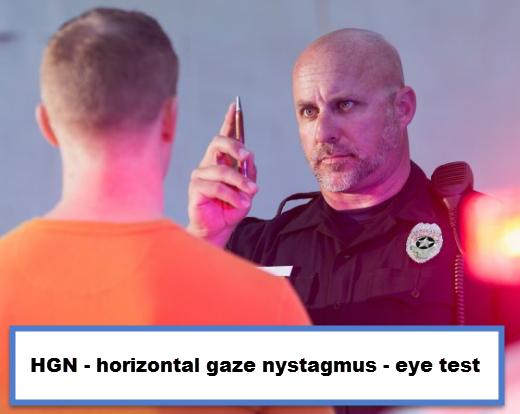
After a drunk driving arrest, your case moves along two paths at once. ALEA handles the license track. It deals only with your right to drive. The criminal track runs through the courts. It covers the DUI charge itself, fines, jail time, and other penalties. The two outcomes are independent of each other under Alabama law.
On the license side, ALEA suspends your right to drive if it finds you drove with a blood alcohol level of 0.08 percent or more. The agency also suspends for a refused chemical test. That finding rests on the arresting officer's report. It is final unless you fight it. Under Alabama law, the period of your driving privilege suspension is 90 days. That applies if your record shows no prior alcohol or drug-related enforcement contact in the past 10 years. It is one year with one prior contact, three years with two, and five years with three or more.
State law says you must send your written hearing request to ALEA's Driver License Division in Montgomery. It is due within 10 days of the notice of intended suspension. The request must arrive or be postmarked by that deadline. Miss it and you waive your right to both the administrative hearing and any judicial review.
At the hearing, the key issue is whether the evidence shows by a preponderance that you drove or had actual physical control of a vehicle. The hearing officer has to find whether your blood alcohol level was 0.08 percent or more. The other issue is whether you refused a chemical test. The hearing is held before the ALEA secretary or an authorized agent. That person may give oaths, issue subpoenas for witnesses, and order up relevant records. The hearing must be set within 30 days of your request.
Lawyers who handle these hearings look for weak spots in the officer's report. They ask whether the chemical test was run the right way. They cross-examine the arresting officer on how the stop went. A win can lead ALEA to call off the suspension order.
When the officer serves the notice of intended suspension, they take your Alabama driver's license. They issue a temporary driving permit valid for 30 days. The permit lets you keep driving while you ask for and attend the hearing. If you do not ask for a hearing within 10 days, you waive it. The suspension then takes effect 45 days after you received the notice of intended suspension.
The ignition interlock option may also come into play. Under Alabama law, a first-offense DUI defendant can reduce a suspension period by installing an approved ignition interlock device on a designated vehicle. The device stops the vehicle from starting if the driver's breath sample reads 0.02 or higher, as defined in state law.
If your license is suspended after a DUI conviction, you must finish several steps before you can reinstate your driver's license in Alabama. The license reinstatement Alabama requires after a DUI brings fees, paperwork, and court-ordered conditions.
Complete the full suspension period. You must serve the whole suspension or revocation term before you become eligible for reinstatement. For a first-offense DUI, this is a mandatory 90-day suspension. A 2nd offense DUI in Alabama and later offenses within a 10-year period carry longer revocation periods. The mandated ignition interlock period, if applicable, must also be completed successfully before the rest of any revocation is commuted.
Finish the court-ordered DUI or substance abuse program. Under state law, all persons convicted of DUI must attend and complete a substance abuse program. You cannot reinstate your license without proof that you finished.
File SR-22 insurance. Alabama requires proof of financial responsibility – commonly called SR-22 insurance – before license reinstatement after a DUI. Your insurance company files the form with ALEA for you. It certifies that you carry the required minimum liability coverage.
Pay the reinstatement fee. By statute, the reinstatement fee for any drug or alcohol related suspension or revocation is $275. Of that amount, $200 goes to the Department of Public Safety Highway Traffic Safety Fund and $75 goes to the State General Fund. An added $50 fee applies if you did not voluntarily surrender your license within 30 days of the suspension notice. The Alabama DMV license reinstatement process also calls for a duplicate license. It carries a new photograph and your current personal data.
Submit your reinstatement application. ALEA handles State of Alabama drivers license reinstatement. Alabama license reinstatement online starts at the ALEA portal, alabamadl.alea.gov. You may also apply in person at an ALEA reinstatement office. Once the agency has your fee and has checked every requirement, it will issue clearance for reinstatement of Alabama drivers license privileges.
Install an interlock device if required. If your conviction requires an ignition interlock device under state law, you must show proof it was installed. You have 30 days from the day you become eligible for an ignition interlock-restricted license. The court will notify ALEA of the restriction. Your reinstated license will show the interlock requirement. Defendants the court finds indigent may qualify for installation at no cost under state law.
Do not get behind the wheel while you wait. Under Alabama law, any person whose driver's license has been cancelled, denied, suspended, or revoked as provided in Alabama's driver licensing law, and who drives on the highways of this state while it is cancelled, denied, suspended, or revoked, is guilty of a misdemeanor. A conviction carries a fine of not less than $100 and not more than $500. The court may add up to 180 days in jail. A $50 penalty is assessed on top of every other fine and cost. The Director of Public Safety may also revoke the license for a further six months.
The car is at risk too. Where the license is revoked for any reason, or suspended as a consequence of a DUI-related offense or of a failure to comply with the implied consent law, a sworn officer must remove the driver from the vehicle and impound it. That holds no matter who owns the car. The exception is when the owner, or a family member of the owner, is in the car and shows a valid driver license. An officer may also skip the impoundment in an emergency or medical necessity that puts life or limb at risk. The registered owner, or an authorized agent, gets the car back after paying all reasonable and customary towing and storage fees.
Drunk driving charges can sometimes be negotiated down to lesser offenses. The outcome turns on the facts and on the quality of your legal help. Several things affect whether a prosecutor will agree to reduce a charge. They include your blood alcohol level, whether there was a crash, how you dealt with the officer, and how strong the evidence is.
In some cases, a DUI may be negotiated down to reckless driving or a similar lesser offense. That can cut the hit to your driving record, your insurance rates, and your criminal history. Reductions are never a given. They turn on the facts of each case.
Is a DUI in Alabama a felony? Not for most people. First through third offenses are misdemeanors under state law. But a fourth or subsequent DUI conviction is a Class C felony. Any DUI conviction where the person has a previous felony DUI conviction is also a Class C felony. The felony threshold is measured within a 10-year period.
A felony DUI conviction carries heavy penalties. The fine is not less than $4,100 nor more than $10,100. Imprisonment is not less than one year and one day nor more than 10 years, and at least 10 days of that term must be served in the county jail. License revocation is five years with a four-year interlock requirement.
A blood alcohol level of 0.15 percent or more doubles the minimum punishment under state law. So does a child under 14 riding in the vehicle when the driver is over 21. On a first offense, injury to someone else brings a one-year interlock requirement. A drunk driving defense lawyer can weigh the evidence and pick out the strongest defenses. Those include breath test calibration records. They also take in whether the officer followed proper steps on the traffic stop, and whether the field sobriety tests were valid.
Many people ask how to get a hardship license in Alabama after a DUI suspension. State law limits that option sharply for DUI offenders. Under Alabama law, a person convicted of DUI is not eligible for a hardship driver's license.
That is an important difference. The hardship license program gives limited driving rights to people whose licenses are suspended or revoked. Those people must show they cannot get reasonable transportation and do not pose a risk to public safety. The program covers driving to work, to medical appointments, and for other basic needs. But the statute leaves DUI offenders out.
For DUI defendants, the main alternative to a full suspension is the ignition interlock option. Under Alabama law, a first offender may elect to install an approved ignition interlock device for 90 days, which stays the 90-day suspension. ALEA then issues an ignition interlock-restricted license on proof of installation. That license permits driving only in a vehicle fitted with an approved device. The device is calibrated to stop the car from starting if the driver's blood alcohol level reaches 0.02 or higher.
Where the device is mandated rather than elected, you must serve part of the suspension first. That minimum is 45 days on a first or second conviction, 60 days on a third, and one year on a fourth or subsequent conviction. You then get a court order from the convicting court. You must provide proof that an approved device was installed. You must pay the $200 interlock fee to the court, as state law requires. Indigent defendants may qualify for reduced or waived installation costs under state law.
A drunk driving lawyer can help you sort out which driving options are open in your own case. They can walk you through the ALEA paperwork.
For a first DUI conviction in Alabama, ALEA suspends your license for 90 days. Under state law, though, revocation on a first conviction happens only when the court orders it. You may cut the suspension period short by installing an ignition interlock device on your vehicle. The ALEA suspension is a separate process from any court-ordered suspension.
To reinstate your license in Alabama after a DUI, you must serve the full suspension period. You must finish the court-ordered substance abuse or DUI referral program. You must file SR-22 insurance with ALEA. You must pay the $275 reinstatement fee. You can send the form through the ALEA portal online or visit a reinstatement office in person.
By statute, the reinstatement fee for a drug or alcohol related suspension or revocation is $275. An added $50 fee applies if you did not voluntarily surrender your license within 30 days of the suspension notice. You may also have to pay for a duplicate license with a new photograph upon reinstatement. These fees are separate from any court fines or interlock costs.
No. Under Alabama law, a person convicted of DUI is not eligible for a hardship driver's license. The alternative for DUI defendants is the ignition interlock device option. It allows restricted driving in a vehicle fitted with an approved device. Where the device is mandated, you must serve at least 45 days of the suspension on a first or second conviction. You also need a court order.
If you were arrested for DUI in Alabama, the 10-day deadline to request a hearing with ALEA is urgent. Miss that window and your right to drive can be suspended on its own. That can happen before your criminal case even begins.
Polson & Polson, P.C. focuses on Alabama DUI defense. We can help you handle both the license side and the criminal side of your case. Depending on your case, our team may request the ALEA administrative hearing for you. We look at ignition interlock options to protect your right to drive. We walk you through the license reinstatement steps. We build a defense against the DUI charge itself.
Every case is different, and results depend on the facts. Contact us now for a free consultation to go over your suspension timeline and your options. Call Polson & Polson, P.C. today – time is critical.


