Alabama DUI Attorneys
The Polson Law Firm
The Polson Law Firm





Vehicular homicide usually means causing someone's death by driving in an unlawful or careless way. An experienced criminal defense attorney can explain the charges you face and what to do next.
Alabama has no single statute by that name, the way some states do. Instead, the state charges fatal-crash cases under one of several statutes. Which one applies depends on the facts. The most common paths include:
DUI-related fatalities are charged as manslaughter in Alabama because the homicide-by-vehicle statute expressly excludes the DUI statute as the underlying violation. Knowing which statute applies to your case is the first step in building a defense.
When a crash kills someone, the charge depends on what the driver did and what the proof shows. Here is an overview of the main possibilities.
Homicide by vehicle has two key parts. First, the driver must have knowingly broken a traffic law. Second, that violation must be the proximate cause of the death. The statute leaves DUI out. It covers other traffic offenses, such as reckless driving, running a red light, or speeding. A conviction is a Class C felony.
Manslaughter is broader and more serious. One part of the statute applies when a person recklessly causes a death. Another part covers a person who drives or operates a motor vehicle in violation of Alabama's DUI statute and causes a death. Manslaughter is a Class B felony.
Criminally negligent homicide applies when criminal negligence causes a death. Criminal negligence is a lower mental state than recklessness. The jury may look at traffic statutes and ordinances in deciding whether the driver was culpably negligent. This offense is a Class A misdemeanor.
If other people were hurt in the crash, the state may add assault or reckless endangerment charges. Related DUI charges may be filed as well. One crash can lead to several counts. The choice of charge rests on the facts and on what the prosecutor decides.
When a death results from driving under the influence, Alabama prosecutors pursue manslaughter charges rather than homicide by vehicle, which excludes the DUI statute as the underlying violation. The manslaughter statute sets out that path directly. Under Alabama law, manslaughter applies to a person who drives in violation of the DUI statute and causes a death. This is a Class B felony.
Alabama's DUI statute prohibits driving with a blood alcohol concentration of 0.08 percent or more by weight, with lower limits of 0.02 percent for drivers under 21 and 0.04 percent for commercial drivers. It also prohibits driving under the influence of alcohol. It prohibits driving under the influence of a controlled substance or any impairing substance. Any of these violations can serve as the predicate for a manslaughter charge when a fatality occurs.
These cases often turn on layers of lab proof. BAC testing – by blood draw or breath sample – is central. Whether that test can be used in court is governed by chemical testing procedures. That statute requires chemical tests to follow methods approved by the Department of Forensic Sciences. It also requires that the person who runs the test hold a valid permit. Field sobriety results, dashcam or bodycam footage, crash reconstruction reports, and drug and alcohol test findings often play a role too.
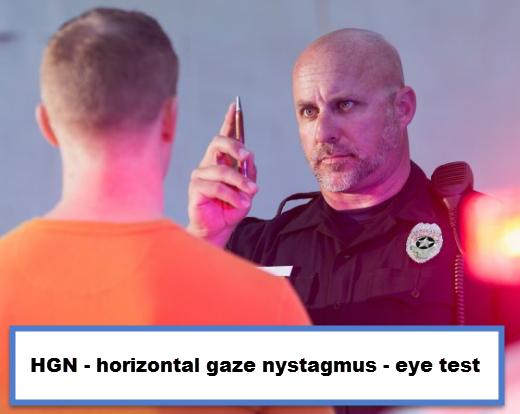
The DUI violation itself must be proved before the manslaughter charge can stand. Defense counsel will often probe each part of the DUI proof. A flaw in the BAC testing, or a failure to follow approved methods, could affect the whole case.
The penalties for a fatal-crash conviction in Alabama vary by the charging statute. The effects also reach far beyond the courtroom.
Manslaughter is classified as a Class B felony under Alabama law, punishable by two to 20 years in prison and a fine of up to $30,000. Homicide by vehicle is a Class C felony, punishable by one year and one day to 10 years in prison and a fine of up to $15,000. Criminally negligent homicide is a Class A misdemeanor, punishable by up to one year in the county jail and a fine of up to $6,000. The judge fixes the sentence and the fine within those statutory limits, based on the charge and the defendant's prior record – consult an attorney for case-specific analysis.
Beyond jail time and fines, other effects may include:
These effects show why early, strong defense matters. A felony conviction like this can reshape a person's whole life.
Defending a vehicular homicide charge takes a careful look at the facts, the forensic evidence, and the legal parts the state must prove. Here are the main paths defense counsel explores.
The state must prove that the driver's conduct was the proximate cause of the death. Defense counsel will look at whether other factors played a part. A broken part on the car, a bad road, someone else's actions, or the victim's own conduct may all matter. If the causal link is weak, the charge may not hold.
In DUI-related cases, the BAC proof is often the main fight. Chemical tests must follow methods the Department of Forensic Sciences approves. They must be run by a person who holds a valid permit. Defense counsel will check the chain of custody and the test steps. How the machine was calibrated, and how much time passed between the driving and the blood draw, also come under review. A person tested has the right to an independent test at their own cost.
The state often leans on crash reconstruction experts to set speed, point of impact, and sight distance. Those findings rest on assumptions, and assumptions can be challenged. Road surface, weather, sight lines, and the math models used may all be questioned. Hiring an outside expert to review the state's findings is a common defense step.
Statements the driver made without proper Miranda warnings may be thrown out. Police may question a driver in custody before telling them their rights. Defense counsel will then move to keep those statements out of the trial.
In homicide-by-vehicle cases, the state must prove the driver knowingly broke a traffic law. If that cannot be proved, the charge may fail. The charge may also fail if the violation was not the proximate cause of the death.
Defense counsel may try to reduce the charge to a lesser included offense. A Class B felony manslaughter conviction carries two to 20 years in prison. A Class A misdemeanor criminally negligent homicide conviction carries no more than one year in jail. The difference in long-term effects is large.
Felony cases in Alabama move through several stages. Every case is different. Still, knowing the usual steps can ease some of the worry.
It usually starts with an arrest or indictment. Next comes an initial appearance, where a judge sets bond terms. A preliminary hearing may be held to see whether probable cause exists. For felony charges, the case then goes before a grand jury, which decides whether to issue an indictment.
After indictment, the defendant is arraigned and enters a plea. The pretrial phase brings discovery, motions, and plea talks. Defense counsel may file motions to keep evidence out. They may also ask the court to bar test results or to drop charges.
Vehicular homicide cases often involve long pretrial work. Crash reconstruction, lab testing, expert witness prep, and review of dashcam or security footage can take many months. The forensic evidence is complex. These cases rarely move fast.
If the case does not settle, it goes to trial. At trial, the state must prove every element beyond a reasonable doubt.
Vehicular homicide cases sit where DUI defense, motor vehicle law, and felony court rules meet. They call for lawyers who know all three fields and how they work together.
Polson & Polson, P.C. handles DUI and criminal defense in Alabama. The firm takes felony cases in courts across the state. It knows the forensic evidence that drives these cases. Drug and alcohol testing, crash reconstruction, and chemical test rules are central to many cases.
These cases need counsel who can weigh BAC proof against the standards the Department of Forensic Sciences sets. Your lawyer should work with outside crash reconstruction experts. Your lawyer must guide you through the felony court process, from bond hearing to trial. The stakes are too high for a general approach.
If you or a loved one faces charges after a fatal crash in Alabama, call Polson & Polson, P.C. The first talk is free and private.
Time matters. Vehicle damage, security footage, skid marks, and witness memories all fade fast. The days and weeks after a crash are when key proof is saved – or lost.
At a first meeting, the firm will review the facts of your case. It will look at the charges filed or expected and talk through defense options. Every case is different, and outcomes depend on the facts. An experienced defense lawyer can help you weigh your choices and protect your rights.
Contact Polson & Polson, P.C. today to discuss your vehicular homicide defense case.

Alabama has no single statute titled "vehicular homicide." Fatal-crash cases are charged instead under homicide by vehicle, manslaughter, or criminally negligent homicide. Which one applies depends on the facts. A lawyer can tell you which statute fits your case.
Yes, a DUI fatality can be charged as manslaughter in Alabama. Under Alabama law, manslaughter applies to a person who drives in violation of the DUI statute and causes a death. This is a Class B felony. This is the charge the state most often brings in DUI-related fatal crashes.
Homicide by vehicle is a Class C felony that applies when a non-DUI violation of Alabama’s rules of the road causes a death. Manslaughter is a Class B felony that covers reckless killings and DUI-related fatalities. Manslaughter carries stiffer penalties and a higher level of fault.
Yes, you need a lawyer right after a fatal crash. Key proof – vehicle damage, security footage, witness accounts – can be lost within days. A lawyer can start saving that proof. They can also advise you on what to say to police, and protect your rights from the first days of the case.
Charges may be reduced to a lesser offense, or dismissed, if the proof does not support the state's case. Weak points in causation, BAC testing, or the traffic violation could change the outcome. An experienced lawyer can review your case and tell you what is realistic.


