Alabama DUI Attorneys
The Polson Law Firm
The Polson Law Firm





An ignition interlock device (IID) is a breath-alcohol testing unit wired to a vehicle's ignition system. It stops the engine from starting if it detects alcohol in the driver's breath. Alabama requires IIDs after many DUI convictions, and lets a first-time offender elect one instead of a suspension. The state uses it to cut down on repeat drunk driving.
Alabama's IID program operates under ignition interlock device requirements. The Alabama State Law Enforcement Agency (ALEA) serves as the administering authority. The agency oversees the rules for device installation. It issues restricted driver's licenses to drivers who use one. It also tracks compliance for the whole required period. The agency suspends driving privileges when a driver fails to maintain the device or violates program rules.
For many Alabama drivers, the device is not optional. Courts order it after DUI convictions. The agency requires proof of a working device before it issues a restricted license. In some cases, drivers may elect to install one to avoid a full license suspension. A violation can extend the interlock period or lead to new criminal charges. If that is your situation, you need to know your defenses.
Alabama law ties the interlock rules to the facts of the DUI offense and the driver's prior record. What sets it off, and for how long, varies a great deal.
First-offense DUI. Under Alabama law, a first-time DUI conviction carries a 90-day license suspension. However, the driver may elect to install a device for 90 days. That stays the suspension and lets you keep driving. The interlock period becomes mandatory and extends to one year if aggravating factors are present.
Aggravating factors include:
When the one-year mandatory interlock period applies, the driver must first complete a minimum of 45 days of license suspension or revocation. Only then does the interlock period begin.
Chemical test refusal. The statute specifies that the interlock period is one year when the offender refused the prescribed chemical test. Refusal is also one of the factors that makes the interlock mandatory rather than elective.
Second and subsequent DUI convictions. Repeat offenders face longer mandatory interlock periods. The device is required for two years after a second conviction, three years after a third, and four years after a fourth or subsequent conviction. The agency will not reissue a regular driver's license until the court confirms the driver is no longer subject to the interlock requirement.
Financial responsibility. The driver bears all costs unless the court finds the driver indigent for interlock purposes. These include installation fees, monthly monitoring and calibration charges, and removal fees. The agency may also charge up to $150 for issuing an interlock-restricted license. It may charge up to $75 to reissue a regular license after the interlock period ends. Over a multi-year interlock period, that adds up fast.
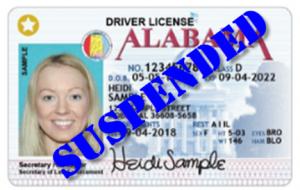
Alabama law lists the exact interlock violations that count during the mandated period. Each violation extends the interlock requirement by six months. Repeat violations stack up fast.
Failed startup tests. The device records a violation when a breath sample registers a blood alcohol concentration at or above 0.02. Under the statute, this becomes a formal violation only if it happens four or more times during a monthly reporting period. One exception applies: a subsequent test within 10 minutes that registers below 0.02 prevents the violation.
So one stray reading above 0.02, followed by a clean retest within 10 minutes, may not trigger the extension. If that happens to you, talk to an ignition interlock violation attorney who can read the device records.
Failed or missed rolling retests. After the car starts, many devices ask for more breath samples while you drive. The results are logged. Rolling retests are a device and provider practice rather than one of the violations the statute lists. Readings at or above 0.02 still count toward the monthly total. The device records are reviewed during monthly calibration downloads.
Tampering or circumvention. Any tampering with, circumventing, or bypassing the device – or even an attempt to do so – constitutes a violation under the statute. The agency treats these violations seriously. They may also lead to new criminal charges or a probation revocation case.
Failure to appear for calibration. The statute requires the driver to comply with servicing and calibration requirements every 30 days. Missing a set appointment is itself a violation that can extend the interlock period.
Driving a car without the device. A driver who must use an interlock may drive only the named car fitted with a working device. Driving any other vehicle is a Class A misdemeanor on a first offense. It adds six months to the interlock period, and the vehicle is normally impounded.
When ALEA identifies a violation, the interlock period is extended by six months. The agency may also suspend driving privileges or tell the court about the lapse. If the licensee fails to maintain the device as required, the court notifies ALEA. The agency then suspends driving privileges until the driver returns to compliance.
Not every failed breath test means the driver had been drinking. Ignition interlock defense work often focuses on how reliable the device is and on the facts around the alleged violation.
Residual mouth alcohol and false positives. Mouthwash, breath sprays, some medicines, and even some foods can leave trace alcohol in the mouth. That triggers a reading above 0.02. Drivers with acid reflux (GERD) may get false readings. Stomach acid that carries trace alcohol can reach the mouth. Diabetic ketoacidosis can also put acetone on the breath. Some devices read that as alcohol.
Device malfunction and calibration errors. These units need regular calibration to give accurate results. A device that has not been kept up may give bad readings. Service records and calibration logs from the provider can show whether the device was working as the maker intended. The logs show its state at the time of the alleged violation.
Chain of custody issues with data downloads. The data the agency reviews comes from monthly downloads by the service provider. Errors in transfer, software glitches, or gaps in the record can undercut the evidence.
Another driver used the car. These devices do not record who gave the breath sample. A spouse, a teenager, or another member of the household may have tried to start the car and set off a failed test. In that case the driver may not be at fault for the reading. Backup proof – work schedules, security video, or witness statements – can support this defense.
Medical conditions. Beyond GERD and diabetes, other health problems that affect lung capacity or breath content may change the readings. A letter from a treating doctor can help show that a reading was not medically sound.
The strength of any ignition interlock defense turns on the device records, the driver's medical history, and the service provider's paperwork. An ignition interlock device attorney who knows how these units work can judge whether the data supports the alleged violation.

When the agency spots a possible interlock violation, the driver usually gets written notice of what the agency plans to do. That notice may be to extend the interlock period or to suspend driving privileges.
Under Alabama law, upon suspending a license, the agency must immediately notify the licensee in writing. Upon request, the agency must provide an opportunity for a hearing as early as practicable. The hearing must occur no later than 30 days after receipt of the request.
This hearing takes place in the county where the licensee resides, unless both parties agree to a different location. The hearing is conducted before the secretary of ALEA or a duly authorized agent.
At the hearing, the agency presents the device data and monitoring records behind the alleged violation. The hearing officer may administer oaths and issue subpoenas. The driver's attorney can ask for subpoenas covering calibration records, device maintenance logs, and data download reports. A key part of the defense is cross-examining the monitoring agent or the provider's witness. The questions go to device accuracy and proper procedure.
After the hearing, the agency may rescind the suspension, continue it, modify it, or extend it. If a duly authorized agent conducts the hearing rather than the secretary, the agent's action must be approved by the secretary.
The split between administrative and criminal results matters. The agency hearing covers license actions – suspension, a longer interlock period, or revocation. Separately, an interlock violation may set off criminal proceedings, such as probation revocation or new charges. Those matters go to circuit or municipal court. Each carries its own rules and penalties.
Drivers should act fast once notice of an alleged violation arrives. The deadline to request a hearing is short. Wait too long and you give up the right to challenge what the agency did.
An ignition interlock device lawyer adds real value at every stage of the process.
Before installation. If the law lets you elect rather than requiring it, an attorney can advise whether installing a device to stay a suspension is the right call. An attorney can also assist with the application for an interlock-restricted driver's license. An attorney helps the driver see the full set of duties before the interlock period begins.
During the interlock period. When a possible violation shows up in the device data, early action may save key evidence. Calibration logs, service records, and raw data downloads are kept only so long. An attorney can call the service provider right away and ask it to hold records that may support a defense.
At the violation hearing. An interlock violation lawyer who knows the agency's rules can present technical defenses. The lawyer can challenge how reliable the device data is. The lawyer can subpoena calibration records and cross-examine monitoring agents. That much prep is hard for a driver on their own to manage in the short time before the hearing.
In related criminal proceedings. If an interlock violation sets off a probation revocation hearing or new criminal charges, the stakes go past the license to possible jail time. An attorney can run one defense across both the administrative case and the criminal case.
Polson & Polson, P.C. focuses on Alabama DUI defense. The firm knows the agency's hearing process and Alabama's circuit and municipal courts. Every case turns on its own facts, its device records, and the court that hears it. Outcomes are never guaranteed.
A breath sample at or above 0.02 is recorded by the device. Under Alabama law, a formal violation occurs if this happens four or more times during a monthly reporting period. An exception applies: a retest within 10 minutes that registers below 0.02 prevents the violation. A confirmed violation extends the IID period by six months. Multiple violations in the same period can compound.
Yes. Drivers have the right to request an administrative hearing before ALEA to challenge an alleged violation. Common defenses include device malfunction, improper calibration, false positives from medical conditions or substances, and evidence that another person used the vehicle. An attorney can subpoena device records and cross-examine the monitoring agent at the hearing.
The duration depends on the offense. A first-offense DUI without aggravating factors may require 90 days if the driver elects installation. With aggravating factors such as a blood alcohol concentration of 0.15 or higher, a child passenger, injury to another person, or chemical test refusal, the mandatory period is one year. Each IID violation during the mandated period adds six months.
Common causes include mouthwash or breath sprays containing alcohol, certain medications, GERD (acid reflux), and diabetic ketoacidosis. Even some foods can leave trace alcohol in the mouth. Waiting a few minutes and retesting often produces a clean result. This is why the statute provides a 10-minute retest window.
Having another person provide a breath sample to start or operate your vehicle is considered circumvention or bypassing of the device. This is a violation under Alabama law and extends the IID period by six months. It may also result in new criminal charges.
Are you facing an alleged interlock violation, a longer interlock period, or a new device after a DUI conviction? Time matters. Hearing request deadlines are short. Key device records – calibration logs, service reports, and raw data downloads – are not kept forever.
Polson & Polson, P.C. focuses on DUI defense across Alabama. We know the agency hearing process and the local courts. Acting early gives your attorney more time to save evidence and build a defense that fits your case.
Contact Polson & Polson, P.C. for a free and private consultation. Every case turns on its own facts, and no outcome is guaranteed. Still, quick action protects your options.