- Free Consultation 24/7: (205) 401-3171 Tap Here To Call Us




Do DUIs Go Away? How Long a DUI Stays on Your Record in Alabama


Do DUIs Go Away on Their Own in Alabama?

A DUI conviction does not automatically disappear from your criminal record or your driving record after a set number of years. The short answer is no, and no amount of time wipes a conviction away. Alabama's expungement law reaches a DUI charge that ended without a conviction, not the conviction itself. The two types of records follow different rules.
Alabama maintains two separate records when a DUI is involved. The first is the criminal conviction record. A DUI conviction stays on file for good, because Alabama's expungement law excludes convictions for serious traffic offenses. The second is the driving record maintained by the Alabama State Law Enforcement Agency (ALEA). Separate statutory lookback periods apply to a prior DUI. They determine how a past DUI affects a later sentence and license consequences.
Your record outcome depends on whether your case resulted in a conviction, dismissal, reduction to a lesser charge, or acquittal. Each path leads to a different result for both your criminal history and your driving history. An Alabama DUI attorney can review your particular situation. This is the most reliable way to understand where you stand.
How Long a DUI Stays on Your Alabama Driving Record
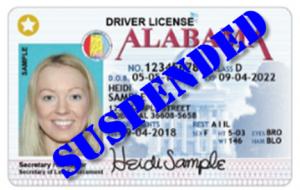
Your driving record is the official history of your license status, traffic violations, and enforcement contacts. ALEA maintains this record and makes it available to courts, insurers, and employers who request it.
Under Alabama's DUI laws, the state uses a 10-year lookback period for sentencing enhancements. A court counts a prior DUI conviction if it occurred within 10 years of the date of the current offense. You face higher fines, longer license revocations, and a mandatory minimum the judge cannot suspend. A second conviction carries five days in jail or 30 days of community service; a third carries 60 days in jail that cannot be probated or suspended. One count has no time limit: if you have a previous felony DUI conviction, every later DUI conviction is a felony no matter how old the earlier one is.
The lookback period and the driving record itself differ. The lookback period governs only what a court may consider when it imposes a sentence. Your driving record may reflect the DUI beyond that 10-year window. Alabama law requires ALEA to keep an individual record of each driver's convictions and to have it available when a license comes up for renewal. A second 10-year count sets the administrative suspension: 90 days with no prior alcohol or drug-related enforcement contact, one year with one, three years with two, and five years with three or more.
A DUI on your driving record may create several practical consequences:
- Insurance rates may increase substantially. Alabama law requires proof of financial responsibility, the SR-22 certificate your insurer files, before a license revoked on a DUI conviction is reissued.
- CDL holders face separate disqualification rules under federal motor carrier regulations. These rules can affect commercial driving privileges.
- Employer background checks that pull driving records may reveal the DUI. This can affect jobs that require driving.
How Long a DUI Stays on Your Alabama Criminal Record
A DUI conviction is a criminal offense under Alabama law. First through third offenses are generally misdemeanors. A fourth or subsequent conviction is a Class C felony. The same applies if the person has a prior felony DUI.
A criminal conviction does not have a rolling expiration date. A DUI conviction stays on your criminal record permanently, because Alabama's expungement statute lets a conviction be expunged only if it is not a serious traffic offense, and the DUI statute sits in the serious traffic offenses article.
This matters because criminal background checks are used by employers, landlords, and professional licensing boards. These checks can surface a DUI conviction years or even decades after the case closed. An arrest that did not lead to a conviction can still appear in some commercial background databases. The arrest record itself must be formally expunged to remove it.
Can You Expunge a DUI in Alabama?
Alabama's expungement statute provides a framework for sealing certain records from public view. For a DUI, everything turns on one question: did the case end in a conviction?
Cases that did not result in conviction may be eligible for expungement. These include dismissals, acquittals, a nolle prosequi entered without conditions, a grand jury no bill, or successful completion of a court-approved diversion program. Waiting periods as short as 90 days apply in some situations. Diversion program completions require one year before filing.

Misdemeanor DUI convictions cannot be expunged in Alabama. The statute lets a conviction be expunged only if it is not a serious traffic offense, and the code places driving under the influence in the serious traffic offenses article. The three-year wait, the completed probation, and the paid fines that open the door for other misdemeanors never reach a DUI conviction. Under Alabama law, no expungement order can be granted until all court-ordered terms and conditions are satisfied and paid in full, and for a DUI conviction no order is available at all.
Felony DUI convictions are closed off the same way. The felony expungement section carries the same serious traffic offense exclusion. A certificate of pardon with restoration of civil and political rights from the Board of Pardons and Paroles is a prerequisite for expunging other felonies, but it does not make a felony DUI expungeable.
One critical point: where expungement is available, it seals the records of the charge. Under Alabama law, the proceedings are deemed never to have occurred for most purposes. The records an order reaches include the driver license suspension records from an administrative suspension, but the expunged file is forwarded to ALEA and kept in an archive indefinitely. These are separate systems with separate rules.
An Alabama DUI attorney can tell you whether your case ended in a way that leaves expungement open.
Dismissed, Reduced, or Acquitted DUIs: What Happens to the Record?
Not every DUI arrest leads to a conviction. Understanding how different outcomes affect your record is essential for anyone wondering whether DUIs ever go away.
Dismissal or nolle prosequi. If the prosecution dismisses your DUI charge or enters a nolle prosequi, you were not convicted. However, the arrest itself may still appear in background check databases. Under Alabama's expungement statute, you can petition to expunge the arrest record after the applicable waiting period: 90 days for a dismissal with prejudice or a nolle prosequi entered without conditions, and more than a year for a dismissal without prejudice that was never refiled.
Acquittal. If a judge or jury finds you not guilty, the charge does not result in a conviction. You may petition for expungement of the arrest record after 90 days.
Reduction to a lesser offense. Alabama law states that reckless driving is not a lesser included offense of DUI. However, prosecutors may agree to amend or reduce a charge as part of a plea agreement. A reduction that still ends in a conviction does not open the expungement door, and reckless driving sits in the same serious traffic offenses article as DUI. Where the reduced charge falls outside that article, the general conviction conditions apply, including a three-year wait and full payment.
Administrative suspension. Under Alabama law, where the suspension rested on a blood alcohol level of 0.08 or more and the criminal DUI charge is dismissed, nolle prossed, or ends in acquittal, the ALEA secretary shall rescind the suspension order. The suspension is then removed from your driving record. That removal does not reach holders of a commercial driver's license or commercial learner's license, or a person operating a commercial vehicle.
An arrest record does not disappear on its own, even when a case ends favorably. Filing a formal expungement petition is generally necessary to clear it from public view.
Why a DUI on Your Record Still Matters Years Later
A DUI that remains on your record can affect your life well beyond the courtroom. The consequences may include:
- Insurance. Insurers may impose surcharges, and the state requires proof of financial responsibility on file before a revoked license is reissued.
- CDL holders. Commercial drivers face federal disqualification rules. These rules can restrict or end a commercial driving career. The effect depends on the number and nature of offenses.
- Professional licensing. Boards governing nursing, law, teaching, real estate, and other professions may consider DUI convictions during application or renewal reviews.
- Employment. Many employers run criminal background checks. A DUI conviction – especially a felony – can limit job opportunities.
- Immigration. Non-citizens may face immigration consequences from a DUI conviction, depending on the circumstances and the specific charge.
- Firearm rights. Alabama law forbids owning a firearm for five years after any felony conviction, and indefinitely after three or more, so a felony DUI carries that bar.
- Family law. A DUI on your record could become relevant in child custody proceedings, where courts evaluate each parent's fitness.
These consequences vary depending on the circumstances of your case and the specific rules that apply. Consulting an attorney can help you understand which of these issues may affect you.
Steps to Protect or Clear Your DUI Record in Alabama
If a past DUI is affecting your life, there are concrete steps you can take:
Obtain your records. Request a copy of your Alabama driving record from ALEA and your criminal history from ALEA's background check unit. Reviewing these records helps you understand exactly what is visible.
Consult an Alabama DUI attorney. An attorney can tell you whether the way your case ended leaves expungement open. They can advise you on the best path forward based on current Alabama law.
Satisfy all original sentence conditions. Under Alabama law, no expungement order can be granted until all fines, costs, restitution, and other court-ordered conditions are paid in full and completed. Unresolved obligations from the original case can block future record relief.
File an expungement petition. If your case ended without a conviction, you or your attorney can file a petition in the circuit court of the county where the charge was originally filed. The court will review eligibility. If granted, the court will order the expungement of records held by the court and other agencies. The non-conviction grounds carry no limit on the number of expungements, except that dismissals after a diversion program are capped at two.
Taking these steps sooner rather than later can help you move forward. Waiting does not improve your position, but taking action often does.
Speak With an Alabama DUI Defense Attorney About Your Record
Your DUI case may still be pending, or a past conviction may be affecting your life today. Understanding your options is the first step toward resolving the issue. Polson & Polson, P.C. focuses on Alabama DUI defense and is familiar with Alabama's courts and DUI statutes, including the expungement process.
If you are facing a new DUI charge, early action matters. Deadlines apply to administrative license hearings and other post-arrest proceedings. Missing them can limit your options. If you are dealing with an old DUI, an attorney can tell you whether the way your case ended leaves expungement open and what other options remain.
Contact Alabama DUI Defense for a free consultation to discuss defending your charge, pursuing a dismissal or reduction, or evaluating your expungement eligibility. Every case is different. The outcome depends on the specific facts and circumstances involved.

Frequently Asked Questions
Do DUIs Ever Go Away on Their Own in Alabama?
A DUI conviction does not automatically disappear from your criminal record or your driving record after a set period. A DUI conviction cannot be expunged in Alabama, because the expungement statute excludes convictions for serious traffic offenses.
How Long Does a DUI Stay on Your Driving Record in Alabama?
Alabama uses a 10-year lookback period to determine whether a new DUI counts as a repeat offense for sentencing purposes. However, the DUI entry on your ALEA driving record may remain visible beyond that 10-year window.
Can a DUI Be Expunged in Alabama?
It depends on how the case ended. DUI charges that were dismissed, nolle prossed, or resolved by acquittal may be eligible for expungement after a 90-day waiting period. A DUI conviction cannot be expunged. The expungement statute lets a conviction be expunged only if it is not a serious traffic offense, and the DUI statute sits in that article.
Does a Dismissed DUI Still Show Up on a Background Check?
A dismissed DUI charge can still appear in commercial background check databases even when the charge is dismissed. The arrest record may remain visible until a formal expungement petition is filed and granted. Filing for expungement is generally the only way to remove a dismissed charge from public view.
How Long Is the DUI Lookback Period in Alabama?
Alabama's DUI lookback period is 10 years. Under Alabama law, a court counts a prior DUI conviction at sentencing if it occurred within 10 years of the current offense. Penalties increase at each level, and a previous felony DUI conviction counts no matter how old it is.
We Accept the Following Payment Solutions


