- Free Consultation 24/7: (205) 401-3171 Tap Here To Call Us




Drunk Driving Consequences in Alabama: What to Expect After a DUI


What Are the Consequences of a DUI in Alabama?

Drunk driving consequences in Alabama are severe and far-reaching. A DUI conviction carries three main types of consequences. These are criminal penalties such as jail time, fines, and probation. Administrative penalties include license suspension and ignition interlock requirements. Collateral consequences affect your insurance, employment, and permanent record.
Alabama DUI law defines the offense and sets penalties for each conviction level. It also establishes mandatory minimums that judges cannot waive. Penalties grow much harsher with each new offense. Certain aggravating factors can double the minimum punishment even on a first charge.
Knowing what you face helps you make better choices. If you or someone you love is charged with drunk driving in Alabama, this guide walks you through it.

Criminal Penalties for a DUI Conviction
Alabama imposes escalating criminal penalties based on the number of prior DUI convictions within the preceding 10 years. Under Alabama law, each offense level carries its own range of jail time and fines.
First Offense: A first DUI conviction is a misdemeanor. The court may impose up to one year in jail, a fine of not less than $600 nor more than $2,100, or both. There is no mandatory minimum jail sentence for a standard first offense.
Second Offense: A second conviction carries a fine of not less than $1,100 nor more than $5,100. Jail time can extend up to one year. The sentence must include at least five days in jail or at least 30 days of community service. The court cannot suspend or probate this mandatory portion.
Third Offense: A third conviction requires a fine of not less than $2,100 nor more than $10,100. Imprisonment must be at least 60 days but no more than one year. The minimum 60 days must be served in jail and cannot be probated or suspended.
Fourth or Subsequent Offense: A fourth DUI is a Class C felony. The fine is not less than $4,100 nor more than $10,100. Imprisonment ranges from one year and one day to 10 years. A mandatory minimum of 10 days must be served in county jail.
Aggravating Factors That Increase Penalties
Several circumstances can double the minimum punishment. If the driver's blood alcohol concentration was 0.15 percent or more by weight, the court must impose at least double the minimum sentence. The same doubling applies when a driver over age 21 is convicted and a child under age 14 was a passenger in the vehicle.
Refusing a chemical test carries a license suspension of at least 90 days on its own. Causing injury to another person is also an aggravating factor. On a first conviction with any of these factors, a mandatory one-year ignition interlock requirement applies.

License Suspension and Ignition Interlock Requirements
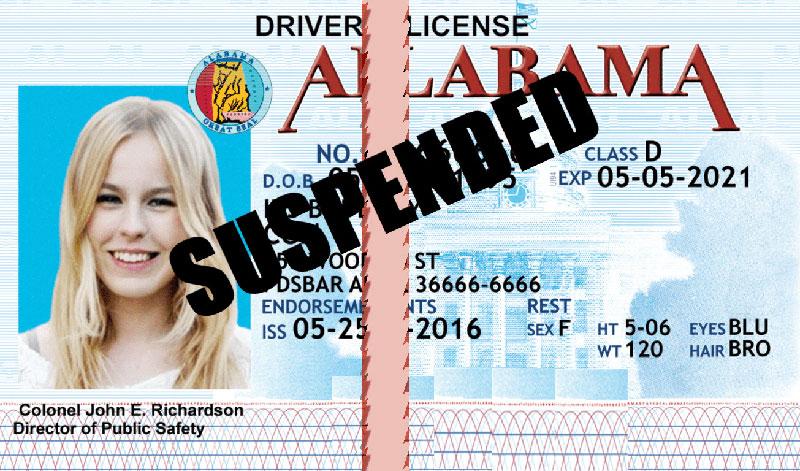
Alabama handles your license on two separate tracks. The Alabama State Law Enforcement Agency (ALEA) administers an administrative suspension that is separate from any criminal court action.
Administrative Suspension Through ALEA
Under Alabama law, the administrative suspension period depends on the driver's history of alcohol or drug-related enforcement contacts within the preceding 10 years. A driver with no prior contacts faces a 90-day suspension. One prior contact results in a one-year suspension. Two prior contacts lead to a three-year suspension. Three or more prior contacts trigger a five-year suspension.
The suspension takes effect 45 days after the driver receives notice. Drivers may request an administrative hearing within 10 days of the notice. The request must be hand delivered or mailed and postmarked inside that window. Missing the deadline waives both the hearing and judicial review. A written administrative review may still be requested within 90 days of the notice.
Ignition Interlock Device Requirements
Alabama law requires ignition interlock device (IID) installation for every DUI conviction except a standard first offense. On a standard first offense, ALEA suspends driving privileges for 90 days. The driver may elect to install an IID for 90 days to stay the suspension. When aggravating factors are present on a first offense, the IID period extends to one year.
Second offenses require a two-year IID period. Third offenses require three years. A fourth or subsequent conviction requires four years. The IID period starts after at least 45 days of suspension on a second offense, 60 days on a third, and one year on a fourth. To get an ignition interlock restricted license from ALEA, the driver must present a court order and proof of IID installation. No one has to install a device if no certified provider operates within 50 miles of his or her home, business, or job.
The IID must be calibrated so the vehicle will not start if the operator's blood alcohol concentration, measured from a breath sample, reaches 0.02. An interlock violation extends the IID requirement by an additional six months. A violation means four or more breath samples at or above 0.02 in a monthly reporting period, tampering with the device, or missing the required 30-day calibration.
A second DUI conviction within 10 years also reaches the driver's vehicle registrations. The Alabama Department of Revenue suspends the registration of every vehicle the repeat offender owns for the length of the license suspension. There are two exceptions: a working IID on the designated vehicle, or undue hardship on someone else who depends on the vehicle.
Financial Costs Beyond Fines
The fines in the statute are only a fraction of the true financial drunk driving consequences. A DUI sets off a chain of costs that many people do not expect.
Court costs and fees add a lot to the base fine. Alabama requires every person convicted of DUI to complete a court referral program for substance abuse evaluation. ALEA will not reissue a license until it has proof the program was completed. This program carries its own fees. Anyone ordered to install an IID, or who elects to install one, must pay a $200 fee to the court. They must also pay all costs for installation, monthly calibration, and monitoring through an approved provider.
ALEA may set a fee of up to $150 for the ignition interlock restricted license. It sets a fee of up to $75 to reissue a regular license afterward. Drivers must also give and keep proof of financial responsibility, the insurance certificate filed as an SR-22, before ALEA will reissue a license and for three years after. This often means much higher car insurance rates for years.
Lost wages add up too, from court dates, jail time, and required class time. Lawyer fees apply as well. The true cost of a DUI goes far beyond the fine schedule in the statute.
Long-Term Collateral Consequences of a DUI
The consequences of DUI conviction reach into nearly every area of life. Many people do not see how one conviction can change their future.
Employment: Most employers conduct background checks. A DUI conviction, especially a felony fourth offense, may disqualify applicants from jobs in transportation, healthcare, education, government, and other fields. Holders of a commercial driver's license (CDL) face disqualification of commercial driving privileges under federal regulations. A first conviction disqualifies the holder for one year, even if the offense happened in a personal vehicle.
Professional Licensing: Nurses, teachers, attorneys, pharmacists, and other licensed professionals may face action from their licensing boards after a DUI conviction. What happens next depends on the profession. It can range from mandatory reporting to license suspension.
Security Clearances and Immigration: A DUI conviction may affect a federal security clearance. For non-citizens, a conviction can matter in an immigration case. Anyone who is not a United States citizen should ask an immigration lawyer before resolving a DUI charge.
Education: College applicants may need to disclose criminal convictions on applications. A school may also weigh a conviction in its own admissions or disciplinary decisions.
Family Court: A DUI conviction may become a factor in child custody disputes. This is especially true if the offense involved a child passenger or suggests a pattern of substance abuse.
Firearm Rights: A misdemeanor DUI does not typically affect firearm rights. A fourth-offense felony DUI conviction does cost the right to possess a firearm. Alabama bars possession for five years after any felony conviction, and federal law bars it with no time limit.
Critically, Alabama's expungement statute does not permit expungement of DUI convictions. In most cases the criminal record is permanent.
How Long a DUI Stays on Your Record in Alabama
Alabama uses a 10-year lookback period for DUI enhancement purposes. If a person has a prior conviction within the preceding 10 years, the next offense is treated as a second, third, or fourth offense. Penalties grow harsher with each level.
If a person has a previous felony DUI conviction, all subsequent DUI convictions are treated as felonies. This applies regardless of when the prior felony occurred.
The criminal conviction itself generally remains on a person's record permanently. Under Alabama law, expungement relief allows expungement of certain charges that were dismissed, no-billed, or resulted in acquittal. Expunging a misdemeanor conviction takes three years from the conviction date plus completion of all probation, fines, and restitution. Expunging a felony conviction takes a certificate of pardon with restoration of civil and political rights. Both statutes exclude serious traffic offenses, and driving under the influence is one of them. That leaves a DUI conviction outside Alabama's expungement relief.
Every case is different. If you want to know whether a past DUI can come off your record, ask a licensed Alabama lawyer. A lawyer can look at your facts and tell you what options you have.
Can You Reduce the Consequences of a DUI Charge?
After a DUI arrest in Alabama, the case usually moves through two systems at once. One is the administrative side. The other is the criminal case. On the administrative side, the driver has a short window to ask ALEA for a hearing to contest the license suspension. Missing the 10-day deadline to request that hearing waives the right to a hearing and to judicial review. A written administrative review may still be requested within 90 days of the notice.
On the criminal side, defense work usually focuses on the facts of the arrest. The initial traffic stop must be supported by reasonable suspicion. Field sobriety tests must be given properly and under fair conditions. The breath testing machine must be properly calibrated and kept up under the required rules.
Other issues matter too. The driver should have been properly advised of implied consent rights. The blood alcohol sample must have been collected and handled correctly. The officer must have followed required procedures throughout the arrest.
No two cases are alike. The strength of any defense rests on the facts. An experienced attorney can look at the evidence and point out which issues may apply.

Speak With an Alabama DUI Defense Attorney
If you are facing a DUI charge in Alabama, what you do now matters. It could shape your freedom, your license, and your future. The criminal case and the administrative license hearing each run on their own clock. The administrative hearing deadline is short.
Polson & Polson, P.C. focuses on Alabama DUI defense and knows how these cases move through Alabama's municipal, district, and circuit courts. Contact Alabama DUI Defense today. Talk through your charge, the next steps, and your options. Bring any papers you were handed at the arrest. Getting a lawyer in early can make a real difference on both tracks.

Frequently Asked Questions
What Are the Consequences of a First-Offense DUI in Alabama?
A first-offense DUI in Alabama is a misdemeanor. It carries up to one year in jail, a fine of not less than $600 nor more than $2,100, or both. ALEA will suspend the driver's license for 90 days. The suspension may be stayed by installing an ignition interlock device. Other costs include court fees, substance abuse program fees, and higher insurance premiums.
How Long Does a DUI Stay on Your Record in Alabama?
Alabama uses a 10-year lookback period for enhancement of DUI penalties. The criminal conviction itself generally remains on a person's record permanently. Alabama's expungement statute does not allow expungement of DUI convictions. A prior felony DUI causes all future DUI offenses to be charged as felonies regardless of timing.
Will I Lose My License Immediately After a DUI Arrest in Alabama?
Not immediately. Under Alabama law, the administrative license suspension takes effect 45 days after notice is served. During that window, the driver may request an administrative hearing with ALEA. The hearing request must be received, or mailed and postmarked, within 10 days of the notice of intended suspension. Missing that deadline waives the right to a hearing and to judicial review.
Can a DUI Conviction Affect My Job or Professional License?
Yes. A DUI conviction appears on background checks and may disqualify applicants from certain positions. CDL holders face disqualification of commercial driving privileges. Licensed professionals, including nurses, teachers, and attorneys, may face disciplinary action from their licensing boards. The impact depends on the profession and the facts of the conviction.
Does Alabama Require an Ignition Interlock Device After a DUI?
In most cases, yes. Alabama law requires IID installation for every DUI conviction except a standard first offense. First offenders may elect a 90-day IID to stay their license suspension. When aggravating factors are present, the IID period increases to one year. Second, third, and fourth offenses require two, three, and four years of IID use, respectively. The device must prevent the vehicle from starting if the operator's blood alcohol concentration, measured from a breath sample, reaches 0.02.
We Accept the Following Payment Solutions


